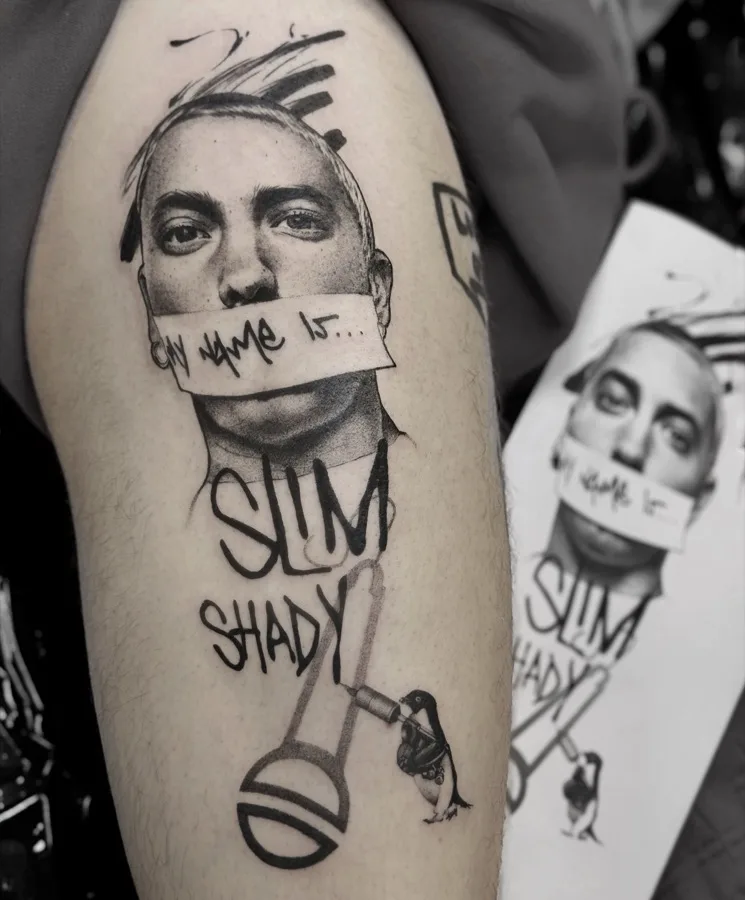
With microrealism and portraits, where you put the tattoo matters almost as much as the design. Good placement helps the piece stay sharp for years; the wrong one makes it lose its detail. Here is how I think about placement together with you.
Areas that hold detail well
Flat areas with a generous surface — the arm (outer and inner), the thigh, chest, back, calf — leave room for detail and contrast and age nicely. For a portrait or a microrealism piece, these are the safest choices.
Areas that call for caution
Hands, fingers, feet and areas with a lot of friction wear faster and may need a touch-up over time. It doesn’t mean it can’t be done — only that I tell you up front what to expect and how much detail holds up there long term.
Size goes hand in hand with placement
A highly detailed design needs a minimum size so the fine lines and shading transitions don’t merge over time. If you want a lot of detail on a small area, it is often better to simplify the design or make the piece a little larger. I’ll tell you honestly what works.
How we choose together
At the consultation we look at your idea, how much detail it has and how it flows on the body. Good placement follows the shape of the muscle and the limb, rather than fighting it. We also consider comfort, visibility and how often the area is exposed to the sun.
You don’t need to arrive with the placement decided. Tell me the idea and where you were thinking, and I’ll suggest the option that holds up best over time. Message me on Instagram, at @rox.tatts.