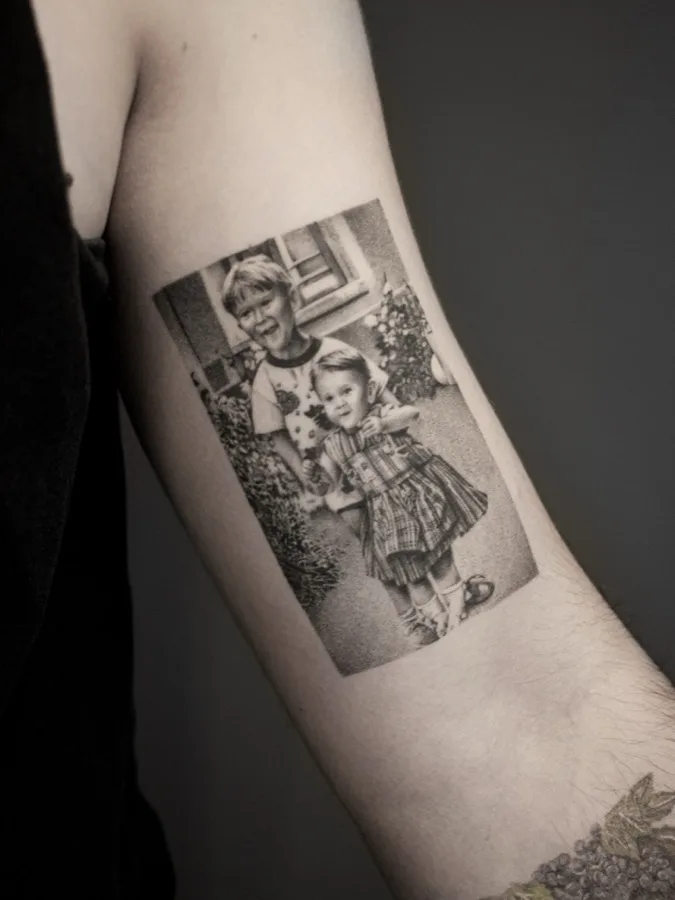
A successful portrait — whether it is a loved one, a child or your pet — almost always starts from the reference photo. I build the likeness from light and shadow, so anything that is clear in the photo I can render, and anything missing from the photo I have no way to invent. Here is how to choose a good reference.
Good, natural light
Look for a photo taken in good light, ideally natural, where the light falls nicely on the face. Avoid direct flash, which flattens the features, and harsh shadows that hide half the face. Soft light brings out the shape of the face and the gaze.
Sharpness and resolution
Send a clear, good-resolution photo where the face or subject is sharp. A small, blurry or pixelated image does not give me the detail I need. If you have several versions, send them all — sometimes a second photo clears up a detail the first one leaves ambiguous.
Expression matters
Choose the photo in which you most recognise the person or animal. Often it is not the most “perfect” photo that is best, but the one that catches the characteristic gaze and expression. That is where the likeness lives.
For pet portraits
For dogs and cats, a photo at eye level, showing the gaze and the texture of the fur, helps enormously. Shots from above, with the animal looking elsewhere, lose exactly what makes the animal recognisable.
What to send and how
Send me your references on Instagram, at @rox.tatts, along with where you want the tattoo and the approximate size. Larger areas — the arm, chest, thigh — leave room for the detail a portrait needs. From there we discuss the design and begin.